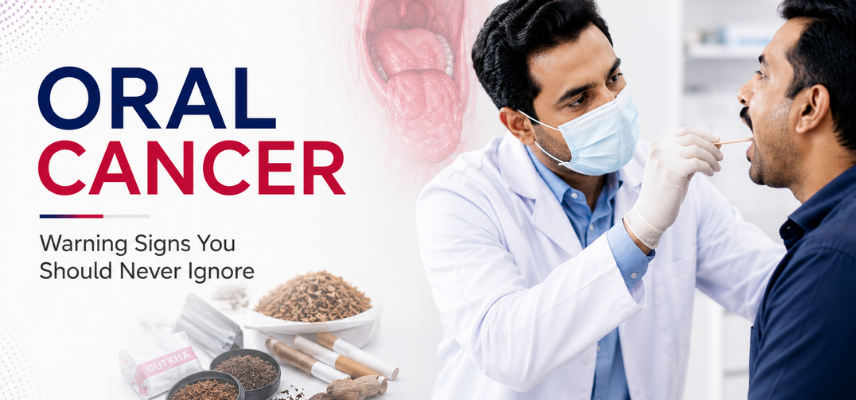
Most oral cancers do not develop suddenly. In many people, warning signs appear early – but are often ignored. Knowing what to look for can make treatment simpler and outcomes better.
Why Oral Cancer Matters in India
When most people think of cancer, they rarely think of the mouth. Yet oral cancer is one of the most common cancers in India and affects thousands of people every year.
A major reason for this high burden is the widespread use of tobacco and areca nut products, including gutkha, khaini, paan with tobacco, zarda, pan masala, bidis, and smokeless tobacco products.
The encouraging part is that many oral cancers are preventable, and early changes can often be detected before cancer becomes advanced.
In clinic, we often meet patients who ignored a mouth ulcer or white patch for months, assuming it would heal on its own. Unfortunately, delays can make treatment more difficult. Paying attention to changes inside the mouth can make a meaningful difference.
What Is Oral Cancer?
Oral cancer refers to cancers that develop in the mouth or throat, including the tongue, cheeks, gums, lips, roof of the mouth, floor of the mouth, and parts of the throat.
The most common type is called squamous cell carcinoma, which begins in the cells lining the inside of the mouth.
Like many cancers, oral cancer develops gradually. Long-term irritation and damage – especially from tobacco and areca nut use – can cause cells to become abnormal over time and eventually cancerous.
Before cancer develops, many people experience pre-cancerous changes, which may appear as:
- White patches (leukoplakia)
- Red patches (erythroplakia)
- Areas of thickening inside the mouth
- Difficulty opening the mouth
These changes deserve medical attention, even if they are painless.
A Common but Overlooked Condition: Oral Submucous Fibrosis (OSMF)
In India, many people who chew gutkha, supari, paan, or areca nut products develop a condition called Oral Submucous Fibrosis (OSMF).
This is a pre-cancerous condition where tissues inside the mouth gradually become stiff.
Warning signs include:
- Burning sensation while eating spicy food
- Difficulty opening the mouth fully
- Tightness inside the cheeks
- Difficulty chewing or eating
Many people ignore these symptoms for years. However, OSMF carries a risk of developing into oral cancer and should be evaluated early.
Major Risk Factors for Oral Cancer
The single biggest risk factor for oral cancer remains tobacco use in any form.
This includes:
- Cigarettes
- Bidis
- Gutkha
- Khaini
- Pan masala with tobacco
- Mishri (tobacco rubbed on gums)
- Chewing tobacco
Alcohol can further increase risk, especially when combined with tobacco.
Chewing areca nut (supari) – even without tobacco – is also harmful and independently increases oral cancer risk.
In some people, especially younger individuals without tobacco exposure, certain throat and tongue cancers may be linked to HPV infection, particularly HPV-16.
Poor oral hygiene, chronic irritation from ill-fitting dentures, and excessive sun exposure to the lips may also contribute to risk.
Symptoms You Should Never Ignore
Early oral cancer often causes little or no pain, which is why many people delay seeking help.
Please do not ignore:
- A mouth ulcer that does not heal within 2–3 weeks
- A white or red patch inside the mouth
- Difficulty opening the mouth
- Burning sensation while eating spicy food
- Bleeding from the mouth
- A lump inside the cheek or neck
- Difficulty chewing or swallowing
- Persistent hoarseness or sore throat
Most of these symptoms are not cancer, but persistent symptoms should always be checked.
A Simple 5-Minute Mouth Self-Check
Once every month, take a few minutes to look inside your mouth in a mirror.
Check for:
- White or red patches
- Non-healing ulcers
- Swelling or thickening
- Reduced mouth opening
- Changes in the tongue or gums
Lift your tongue and look underneath as well.
If something has not improved after a couple of weeks, do not wait too long to seek medical advice.
How Is Oral Cancer Diagnosed?
A doctor or dentist can often identify suspicious areas through a simple examination of the mouth.
If anything looks concerning, a biopsy – taking a small tissue sample – may be advised to confirm the diagnosis.
Scans such as CT, MRI, or PET scans may sometimes be needed to understand the extent of disease and help plan treatment.
Treatment Options
Treatment depends on where the cancer is located and how early it is diagnosed.
Early-Stage Disease
When detected early, oral cancer may often be treated with surgery, radiation, or both, with good chances of cure.
Advanced Disease
More advanced cancers may require a combination of:
- Surgery
- Radiation therapy
- Chemotherapy
Some patients may also need reconstructive procedures, speech therapy, or swallowing support during recovery.
The important thing to remember is this:
Early treatment is usually simpler and more successful than delayed treatment.
Prevention: Small Steps Matter
The most effective way to reduce oral cancer risk is to stop tobacco and areca nut use.
This can be difficult, especially when gutkha or tobacco products have been used for years. Quitting often takes support, and many people require several attempts before succeeding.
If you use tobacco regularly, speak with your doctor about:
- Nicotine replacement therapy
- Tobacco cessation programmes
- Counselling support
Regular dental check-ups and paying attention to changes inside the mouth also help with early detection.

A Final Word
Oral cancer is common in India, but many cases can be prevented or detected early.
If you smoke, chew tobacco, use gutkha or supari, or have a mouth ulcer that is not healing, please do not ignore it.
A simple examination today may help avoid a much bigger problem later.
Early evaluation makes treatment easier – and often far more successful.
References
-
- Sankaranarayanan R, Ramadas K, Thomas G, et al. Effect of screening on oral cancer mortality in Kerala, India: a cluster-randomised controlled trial. Lancet. 2005;365(9475):1927–1933.
- Warnakulasuriya S. Global epidemiology of oral and oropharyngeal cancer. Oral Oncology. 2009;45(4–5):309–316.
- Mehta FS, Hamner JE. Tobacco Related Oral Mucosal Lesions and Conditions in India. Bombay: Basic Dental Research Unit; 1993.
- Gillison ML, Koch WM, Capone RB, et al. Evidence for a causal association between human papillomavirus and a subset of head and neck cancers. J Natl Cancer Inst. 2000;92(9):709–720.
- Gupta PC, Ray CS. Smokeless tobacco and health in India and South Asia. Respirology. 2003;8(4):419–431.
- Mehrotra R, Gupta DK. Exciting new advances in oral cancer diagnosis: avenues to early detection. Head Neck Oncology. 2011.