
Prevention is possible. Early detection saves lives. Understanding your risk is the first step toward protecting your health.
A Cancer We Can Often Prevent
Cervical cancer remains one of the most common cancers affecting women, including in India. Yet it is also one of the few cancers where we have effective ways to prevent disease or detect it at a very early stage.
In practice, many women still come to medical attention only after symptoms begin, even though regular screening could have detected changes much earlier. The encouraging news is that with awareness, timely screening, and vaccination, many cases of cervical cancer can be prevented.
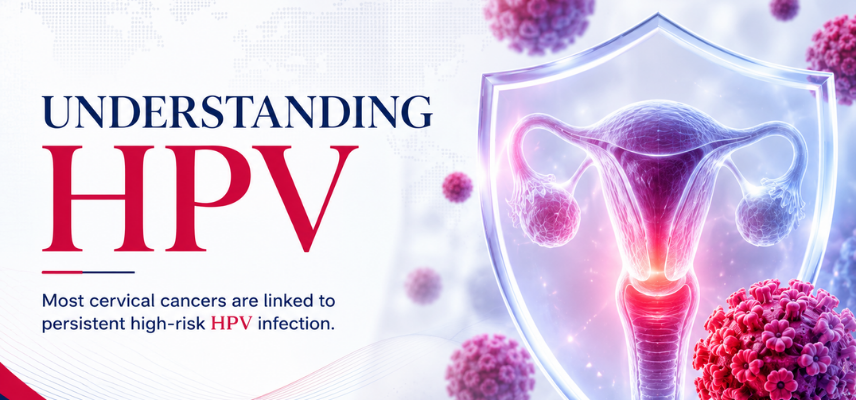
The cervix is the lower part of the uterus (womb) that connects to the vagina. Cervical cancer develops when cells in this area begin to grow abnormally and, over time, become cancerous. In most cases, we know what drives this process: a long-standing infection with certain high-risk types of the Human Papillomavirus (HPV).
Understanding HPV
HPV is a very common viral infection spread mainly through sexual contact. Hearing this often causes unnecessary worry, so it is important to know that HPV infection is common and does not mean someone has cancer.
Most sexually active people are exposed to HPV at some point in life. In the majority of cases, the body clears the infection naturally within one to two years without causing any harm.
However, in some women, certain high-risk HPV types – particularly HPV 16 and HPV 18 – remain in the body for many years. These persistent infections can slowly cause changes in cervical cells that may eventually lead to cancer if left untreated.
The good thing is that this process usually develops gradually over 10–15 years, giving a long window for screening and treatment before cancer develops.
HPV Vaccination: A Powerful Step in Prevention
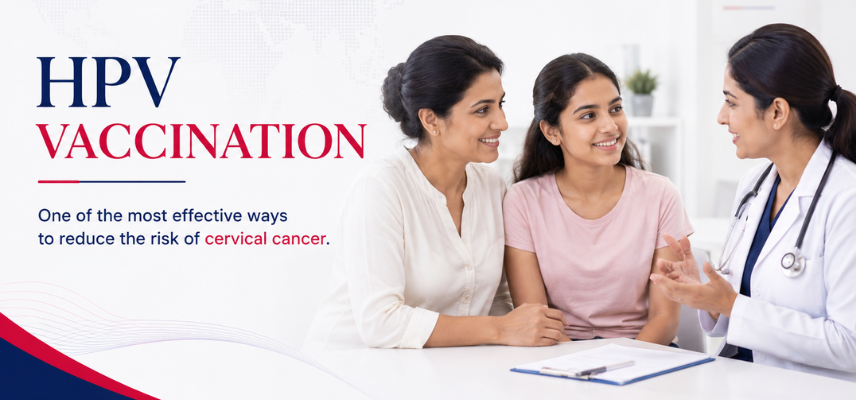
One of the most effective ways to lower the risk of cervical cancer is the HPV vaccine.
The vaccine works best when given before exposure to HPV, ideally between 9 and 14 years of age. In India, awareness and access are improving, and many families now choose vaccination for adolescent girls. In some settings, boys may also be offered vaccination.
Parents often ask whether the vaccine is safe. Large studies across many countries have shown that the HPV vaccine has a strong safety record and significantly lowers the risk of cervical cancer.
Even if someone has received the vaccine, routine screening remains important because no vaccine offers complete protection against all cancer-causing HPV types.
Screening: Detecting Problems Before Cancer Develops
A major reason cervical cancer can often be prevented is that screening helps detect abnormal cell changes early – sometimes before cancer develops at all.
Pap Smear (Pap Test)
A Pap smear is a simple test in which a healthcare provider gently collects a small sample of cells from the cervix for examination.
Many women avoid screening because they worry it may be painful. In reality, the test usually takes only a few minutes and may cause mild discomfort, but it is generally well tolerated.
HPV DNA Testing
A newer option, HPV DNA testing, looks directly for high-risk HPV infection and is increasingly being used alongside or instead of Pap smears in some centres.
VIA Screening in India
In many Indian hospitals and community programmes, Visual Inspection with Acetic Acid (VIA) is also used. This is a low-cost screening method where the cervix is examined after applying a mild vinegar solution.
VIA has helped improve access to screening, especially where advanced testing may not be easily available.
If you are unsure which screening option is right for you, a discussion with your doctor or women’s health clinic can help guide the decision.
Symptoms You Should Not Ignore
One of the challenges with cervical cancer is that early stages may not cause symptoms, which is why screening matters so much.

As the disease progresses, symptoms may include:
- Unusual vaginal bleeding, especially between periods
- Bleeding after sexual intercourse
- Bleeding after menopause
- Persistent unusual vaginal discharge
- Pelvic pain or pain during intercourse
These symptoms do not automatically mean cancer, and many women experience them due to infections or other non-cancerous conditions. However, persistent symptoms should not be ignored and deserve medical evaluation.
What Happens If a Screening Test Is Abnormal?
An abnormal Pap smear or HPV test does not automatically mean cancer.
In many women, screening detects early or pre-cancerous changes in the cervix that can often be treated effectively before cancer develops.
Depending on the findings, your doctor may recommend repeat testing, a closer examination of the cervix, or a small procedure to remove abnormal areas if needed.
Treatment Options
Treatment depends on the stage of disease at diagnosis.
Early-Stage Disease
When cervical cancer is found early, treatment may involve surgery alone. In selected younger women, fertility-preserving options may sometimes be possible.
Locally Advanced Disease
For cancers that are more advanced but still confined to the pelvis, treatment commonly includes radiation therapy along with chemotherapy, which can be highly effective.
Advanced Disease
In recurrent or advanced cases, newer treatments including targeted therapies and immunotherapy may sometimes be considered in selected patients.
You will usually meet a doctor who specialises in women’s cancers so that the treatment options, side effects, and expected outcomes can be explained clearly.
A Message of Reassurance
Many women feel anxious about cervical cancer, but there is genuine reason for hope.
Because cervical cancer usually develops slowly, regular screening gives us an opportunity to detect problems early and treat them effectively.
Protecting yourself often comes down to a few practical steps:
- Consider the HPV vaccine if appropriate
- Stay regular with screening
- Do not ignore symptoms such as unusual bleeding or discharge
If you are unsure when your last screening was – or if you have never had one – it is worth speaking with your doctor or women’s health clinic. Early care can make a meaningful difference.

References
- World Health Organization. Cervical cancer fact sheet. WHO; latest update.
- Arbyn M, Weiderpass E, Bruni L, et al. Estimates of incidence and mortality of cervical cancer worldwide: a worldwide analysis. Lancet Global Health. 2020;8(2):e191–e203.
- Crosbie EJ, Einstein MH, Franceschi S, Kitchener HC. Human papillomavirus and cervical cancer. Lancet. 2013;382(9895):889–899.
- Drolet M, Bénard É, Pérez N, et al. Population-level impact and herd effects following HPV vaccination programmes: updated systematic review and meta-analysis. Lancet. 2019;394(10197):497–509.
- Sankaranarayanan R, Nene BM, Shastri SS, et al. HPV screening for cervical cancer in rural India. New England Journal of Medicine. 2009;360:1385–1394.
- Bhatla N, Singhal S. Primary HPV screening for cervical cancer in India: current perspectives. Indian Journal of Medical Research. 2020.